
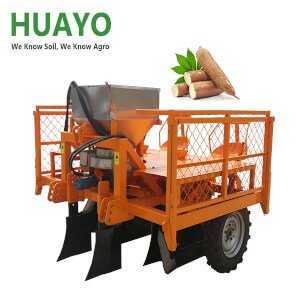
This ridging-type twin-row Cassava Planter uses a practical wide-narrow row planting mode. On each ridge, the two rows of cassava are spaced 60cm apart. Between adjacent ridges, the distance is 120cm – a design that’s perfectly suited for mechanized farming.
Why It Works for Mechanized Operations
- No more root damage from machinery: The 120cm space between ridges fits the wheelbase of most farm tractors (90-120HP). Tractors and other equipment can drive smoothly between ridges, avoiding the common problem of crushing cassava roots during planting, weeding, or harvesting.
- Matches all farming steps: The standardized ridge size (90-110cm top width, 25-35cm height) and row spacing work with all mechanized tools. You can use machines for planting, spraying herbicides, chopping straw, and harvesting – no need for manual adjustments.
- Higher yield, lower labor costs: The wide-narrow rows let soil breathe better, giving cassava roots more room to grow. This boosts yields by over 5% (up to 33-42 tons per hectare). Mechanized work also cuts labor costs by half for planting and 60% for harvesting, saving you time and money.
Perfect for large-scale cassava farms in tropical and subtropical areas, this planter makes modern, efficient cassava farming simple.
How It Works: Simple, Integrated Operation
First: Build Standard Ridges
The planter connects seamlessly to a 90-120HP tractor. Once activated, it first digs and shapes uniform, high-performance ridges—each featuring a 90-110cm top width, 25-35cm height, and 50cm-wide furrows between adjacent ridges. Not only do these ridges keep the soil loose and well-aerated, but they also drain efficiently, ultimately creating ideal growing conditions for cassava root development.
One Pass: Plant, Fertilize & Cover in a Single Go
As the tractor moves steadily forward, the planter streamlines three critical tasks into one smooth operation—no extra steps required:
- First, it precisely cuts cassava stems into uniform segments, with the length fully adjustable to match your specific farming needs.
- Next, it gently drops these stem segments into the pre-set 60cm-spaced rows on the ridge, ensuring consistent planting density.
- Finally, it delivers fertilizer directly next to the stems (to provide a steady, targeted nutrient supply) and covers both the stems and fertilizer with soil—all in one pass, eliminating the need for any additional manual work.


