Mechanized Pineapple Planting for Commercial Farms: Why Modern Growers Are Making the Switch
Commercial pineapple production has changed dramatically over the past decade. As farms continue to expand, growers face increasing pressure to plant larger areas within shorter planting windows while controlling labor costs and maintaining consistent crop quality.
For many pineapple producers, traditional manual planting methods are no longer sufficient. Labor shortages, rising wages, and inconsistent planting quality have encouraged more commercial farms to invest in mechanized planting solutions.
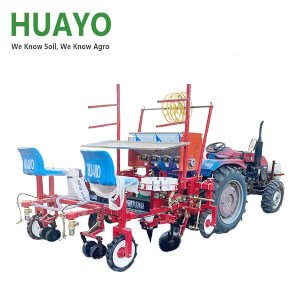
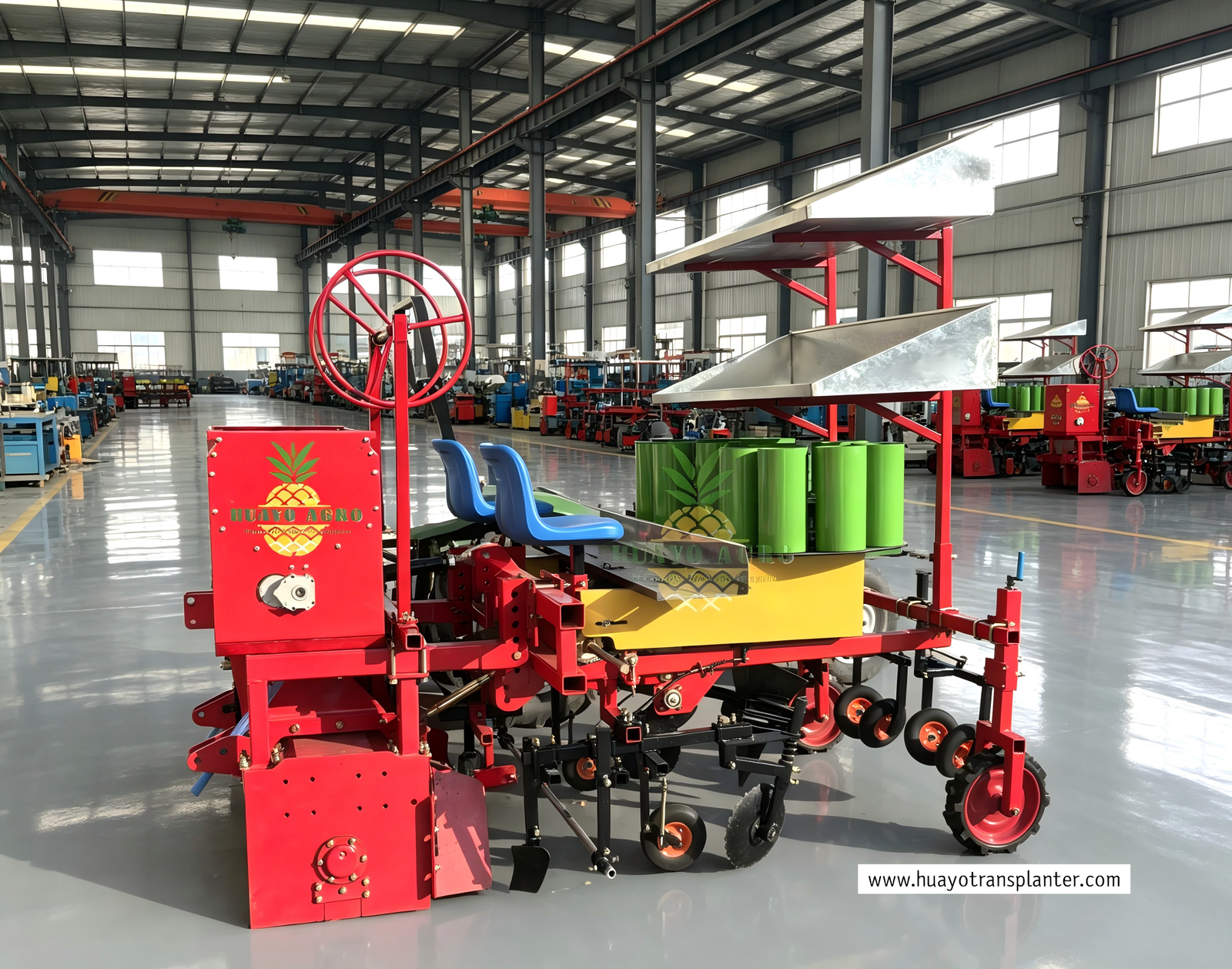
A pineapple seedling transplanter is becoming an essential piece of equipment for modern pineapple production. It not only improves planting efficiency but also helps establish a more uniform crop, laying the foundation for better field management and higher yields.
In this article, we’ll explore why mechanized pineapple planting is becoming the preferred choice for commercial growers and how the right planting equipment can transform pineapple production.
The Challenges Facing Commercial Pineapple Growers
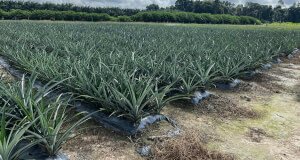
Pineapple cultivation is highly labor-intensive. Every planting season requires thousands—or even millions—of seedlings to be transplanted accurately into prepared beds.
For large plantations, manual planting presents several challenges.
Rising Labor Costs
Finding experienced field workers has become increasingly difficult in many pineapple-producing regions. Even when workers are available, labor costs continue to rise each year.
As plantations expand from dozens to hundreds of hectares, the number of workers required during planting season increases dramatically, making labor one of the largest production expenses.
Limited Planting Window
Pineapple planting is often scheduled according to seasonal weather conditions, irrigation availability, and production planning.
If planting is delayed because of insufficient labor, growers may experience:
- Uneven crop development
- Delayed harvest schedules
- Reduced productivity
- Higher management costs
Completing planting quickly has become just as important as planting correctly.
Inconsistent Planting Quality
Manual planting depends heavily on worker experience and consistency.
Even skilled workers may plant seedlings at different depths or uneven spacing after long hours in the field.
These small differences can lead to:
- Uneven emergence
- Irregular plant growth
- Variable fruit size
- More difficult field management
For commercial operations, consistency is critical.
Why Mechanization Is the Future of Pineapple Planting
Mechanization is no longer simply about replacing labor. It is about improving the entire planting process.
A pineapple transplanter allows growers to plant more accurately, more efficiently, and with greater consistency than manual methods.
Instead of relying on large planting crews, growers can complete the same work using a tractor and a small operating team.
This results in significant savings in both time and labor while improving planting quality across the entire field.
Standardized Planting Creates Better Fields
One of the greatest advantages of mechanized planting is standardization.
Every seedling can be placed with consistent:
- Planting depth
- Plant spacing
- Row spacing
- Vertical positioning
This creates a much more uniform plantation.
Uniform fields provide several important benefits:
Better Root Establishment
Proper planting depth allows seedlings to establish strong root systems more quickly.
Healthy roots improve nutrient uptake and increase resistance to environmental stress.
More Uniform Crop Growth
When every plant starts under similar conditions, crop growth becomes much more consistent.
Uniform growth makes irrigation, fertilization, weed control, and harvesting easier to manage.
Higher Yield Potential
Although many factors influence yield, uniform planting provides every seedling with similar growing conditions.
The result is often more consistent fruit size and improved overall productivity.
Greater Efficiency for Large-Scale Operations
Commercial pineapple farms often manage hundreds of hectares.
Planting such large areas manually requires significant planning and labor coordination.
A mechanized transplanter dramatically increases field productivity.
Instead of spending weeks planting a field, growers can complete operations much faster, allowing crops to be established within the optimal planting period.
Higher efficiency also means tractors, irrigation systems, and management schedules can move to the next field sooner.
Lower Production Costs Over Time
Purchasing agricultural machinery is an investment, but for commercial farms, the long-term savings can be substantial.
Mechanized planting helps reduce costs by:
- Reducing seasonal labor requirements
- Shortening planting time
- Improving operational efficiency
- Lowering management costs
- Reducing planting errors
As labor costs continue to increase worldwide, mechanization offers a practical way to improve profitability.
One Machine, Multiple Operations
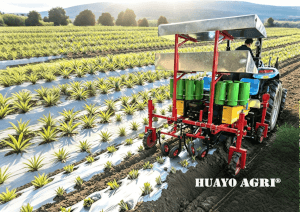
Modern pineapple transplanters do much more than simply place seedlings into the soil.
Depending on the configuration, additional functions may include:
- Fertilizer application
- Watering during transplanting
- Drip tape laying
- Plastic mulch installation
By combining several operations into a single pass, growers can:
- Reduce tractor trips across the field
- Save fuel
- Lower labor requirements
- Improve operational efficiency
- Reduce soil compaction
This integrated approach has become increasingly popular among commercial pineapple producers.
Supporting Better Fertilizer Performance
Successful pineapple production depends not only on fertilizer quality but also on proper crop establishment.
Uniform planting helps create consistent root development across the field.
As a result:
- Fertilizers are applied more effectively.
- Nutrient uptake becomes more uniform.
- Crop growth is more consistent.
- Fertilizer investments generate better returns.
For growers aiming to maximize productivity, planting quality and fertilizer management work hand in hand.
Suitable for Different Types of Pineapple Seedlings
Commercial pineapple production uses various planting materials depending on local practices and production goals.
A modern pineapple seedling transplanter can accommodate different seedling types, including:
- Crowns
- Slips
- Suckers
- Tissue culture seedlings
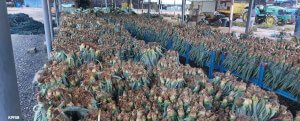
This flexibility allows growers to adapt the machine to different production systems without compromising planting quality.
An Ideal Solution for Agricultural Service Providers
Mechanized planting is also creating new business opportunities.
Agricultural contractors, cooperatives, and input suppliers can use a pineapple transplanter to provide planting services for multiple farms.
Instead of each grower purchasing equipment individually, service providers can help many producers complete planting efficiently during the busy season.
This business model is becoming increasingly popular in regions with expanding commercial pineapple production.
Why Choose the HUAYO Pineapple Seedling Transplanter?
At HUAYO AGRO, we understand the challenges faced by commercial pineapple growers.
Our Pineapple Seedling Transplanter is designed to help plantations improve efficiency while maintaining excellent planting quality.
Key advantages include:
- Accurate planting depth and spacing
- High planting efficiency for commercial operations
- Uniform seedling placement
- Optional fertilizer application system
- Optional watering device
- Optional drip tape laying system
- Optional plastic mulch laying system
- Durable construction for demanding field conditions
- Suitable for multiple types of pineapple seedlings
Whether you operate a commercial plantation, an agricultural cooperative, or a planting service business, our transplanter can help simplify field operations and improve planting consistency.
The Future of Commercial Pineapple Farming
As pineapple production continues to expand worldwide, mechanization will play an increasingly important role.
Growers who invest in efficient planting equipment are better positioned to:
- Reduce labor dependence
- Improve planting quality
- Complete field operations on schedule
- Lower production costs
- Increase long-term profitability
Mechanized planting is no longer just an option—it is becoming a key part of modern commercial pineapple farming.
Frequently Asked Questions
Is a pineapple transplanter suitable for small farms?
While smaller farms can certainly benefit from mechanized planting, pineapple transplanters provide the greatest return on investment for commercial farms, cooperatives, and agricultural service providers managing larger planting areas.
Can the machine apply fertilizer while planting?
Yes. Depending on the configuration, the transplanter can be equipped with a fertilizer application system, allowing planting and fertilization to be completed in a single pass.
What types of pineapple seedlings can be transplanted?
The machine is suitable for various planting materials, including crowns, slips, suckers, and tissue culture seedlings.
Why is uniform planting important?
Uniform planting improves root establishment, promotes consistent crop growth, simplifies field management, and helps maximize overall productivity.
Ready to Modernize Your Pineapple Planting?
If you’re looking to improve planting efficiency, reduce labor costs, and establish a more uniform pineapple crop, a mechanized planting solution can make a significant difference.
The HUAYO Pineapple Seedling Transplanter is designed specifically for commercial growers who demand reliability, precision, and productivity. Contact our team today to learn how our planting solutions can help your farm achieve greater efficiency and long-term success.
#pineapple #pineappletransplanter #huayotransplanter